
Plastic is everywhere. It is in bags and bottles. But it is very bad for the earth. It does not go away. It stays for years. It hurts animals and soil. A plastic-free zone is a safe place. It is a place with no plastic trash. It helps nature breathe. It keeps the water clean. These essays are written for students in classes 1 to 12.
Essay on Plastic Free Zone in 100 Words
A plastic-free zone is a special area. In this place, no one uses plastic. Plastic bags are banned. Plastic cups are not allowed. People use cloth bags instead. They use steel bottles for water. This is very good for nature.
Plastic waste is a big problem. It blocks the drains. It makes the streets dirty. Cows eat plastic bags and get sick. When an area becomes plastic-free, it looks clean. The air feels fresh. It teaches people to care. Everyone should try to make their home a plastic-free zone. It is a small step for a better world.
Essay on Plastic Free Zone in 150 Words
Plastic was made to help us. But now it hurts us. It is a major pollutant. A plastic-free zone is a solution. It is an area where single-use plastic is stopped. Single-use plastic means items used once and thrown away. Straws, spoons, and bags are examples.
In a plastic-free zone, shops do not give plastic bags. They use paper or cloth. This reduces garbage. Plastic takes hundreds of years to rot. It stays in the ground. It poisons the soil. Plants cannot grow well. If we stop using it, the soil heals.
Schools can be plastic-free zones. Parks should be plastic-free too. Visitors should not bring plastic wrappers. They should use dustbins. Cleanliness is godliness. A clean place brings health and joy. Making a zone plastic-free requires teamwork. It shows love for the planet Earth.
Essay on Plastic Free Zone in 200 Words
Plastic pollution is a global crisis. The piles of trash are growing high. To fight this, we create plastic-free zones. These are eco-friendly areas. The rules are strict here. Plastic items are replaced with natural ones. Bamboo, wood, and glass are used.
Why is this needed? Because plastic kills wildlife. Birds mistake plastic for food. They eat it and die. Fish in the river eat tiny plastic bits. This enters the food chain. Finally, humans eat the fish. It harms human health too. It can cause cancer.
Creating a plastic-free zone saves lives. It starts with a pledge. People promise to say no to plastic. They carry their own bags. They drink from tap water, not plastic bottles. Offices can adopt this rule. They can stop using plastic files.
Events like weddings can be plastic-free. They can use banana leaves for food. This is traditional and safe. The government supports this. Many cities put fines on plastic use. But force is not enough. Awareness is key. People must understand the danger. A plastic-free zone is a model for a green future.
Essay on Plastic Free Zone in 250 Words
A plastic-free zone is a sanctuary for nature. It is a designated space. Here, the use of plastic is forbidden. The goal is to reduce waste. Our landfills are full. We have no space for trash. Plastic does not decompose. It breaks into small pieces. These are called microplastics.
Microplastics are very dangerous. They are in the water we drink. They are in the air we breathe. A plastic-free zone stops this at the source. It encourages sustainable living. Sustainable means lasting for a long time. Cloth bags last for years. Plastic bags last for minutes.
How to make a zone plastic-free? First, educate the people. Tell them the bad effects. Second, provide alternatives. Shops should sell jute bags. Restaurants should use steel plates. Third, manage waste well. Composting wet waste is good. Recycling dry waste is good.
Many tourist spots are now plastic-free. The mountains were getting dirty. Tourists left chips packets everywhere. Now, strict checks are done. The beauty of the hills is returning. The rivers flow clear again. Local people are happy.
It brings pride to the community. It sets a good example for children. Children learn by watching. If they see a clean zone, they will keep it clean. They will grow up to be responsible citizens. A plastic-free world is a dream. A plastic-free zone is the first step.
Essay on Plastic Free Zone in 300 Words
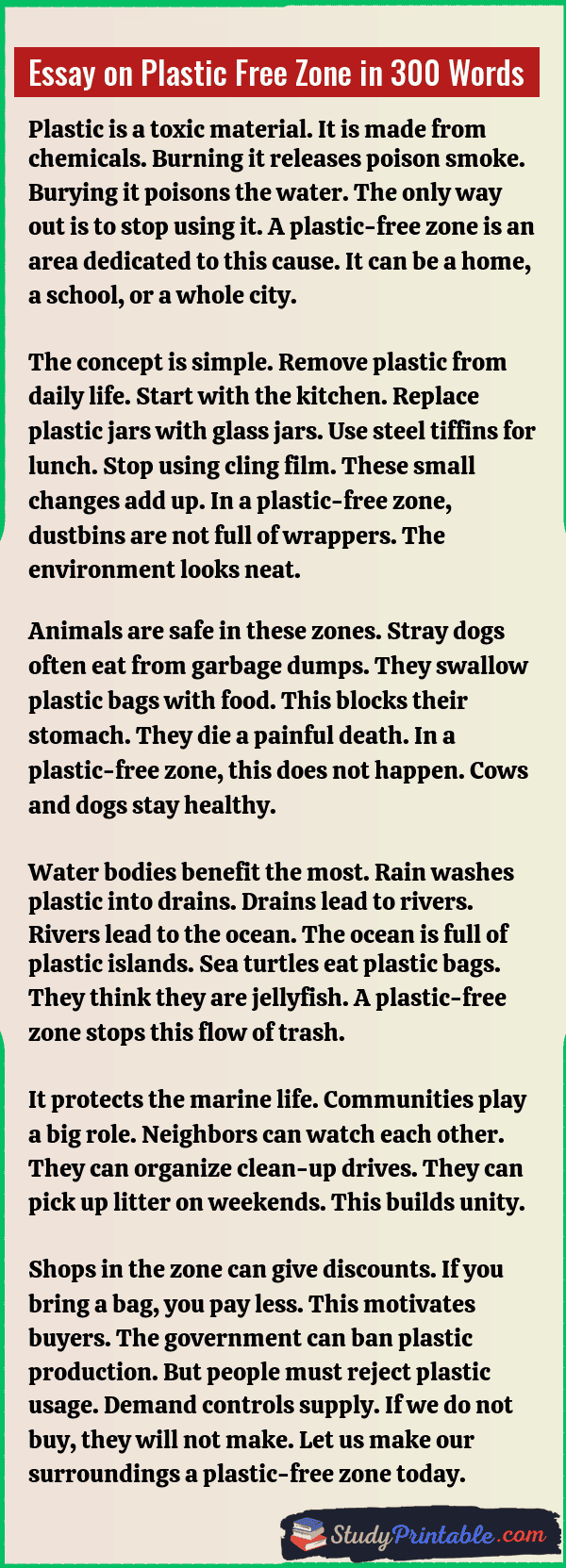
Plastic is a toxic material. It is made from chemicals. Burning it releases poison smoke. Burying it poisons the water. The only way out is to stop using it. A plastic-free zone is an area dedicated to this cause. It can be a home, a school, or a whole city.
The concept is simple. Remove plastic from daily life. Start with the kitchen. Replace plastic jars with glass jars. Use steel tiffins for lunch. Stop using cling film. These small changes add up. In a plastic-free zone, dustbins are not full of wrappers. The environment looks neat.
Animals are safe in these zones. Stray dogs often eat from garbage dumps. They swallow plastic bags with food. This blocks their stomach. They die a painful death. In a plastic-free zone, this does not happen. Cows and dogs stay healthy.
Water bodies benefit the most. Rain washes plastic into drains. Drains lead to rivers. Rivers lead to the ocean. The ocean is full of plastic islands. Sea turtles eat plastic bags. They think they are jellyfish. A plastic-free zone stops this flow of trash.
It protects the marine life. Communities play a big role. Neighbors can watch each other. They can organize clean-up drives. They can pick up litter on weekends. This builds unity.
Shops in the zone can give discounts. If you bring a bag, you pay less. This motivates buyers. The government can ban plastic production. But people must reject plastic usage. Demand controls supply. If we do not buy, they will not make. Let us make our surroundings a plastic-free zone today.
Essay on Plastic Free Zone in 500 Words
Introduction
Plastic was once a wonder material. It is cheap and light. But today, it is a curse. It chokes the earth. It fills the oceans. The need of the hour is action. Creating a plastic-free zone is a strong action. It is an area where plastic is banned. It creates a bubble of cleanliness. It shows how life can be without plastic.
The Dangers of Plastic
Plastic is non-biodegradable. This is a big word. It means nature cannot break it down. An apple rots in days. A plastic bottle takes 450 years. During this time, it releases toxins.
It harms human health. Chemicals from plastic leach into food. This disturbs hormones. It causes diseases.
It harms the environment. Plastic blocks sewage pipes. This causes floods during rain. Water stays on roads. Mosquitoes breed there. Diseases like Dengue spread.
Steps to Create a Zone
Making a zone plastic-free takes effort. It happens in steps.
1. Awareness: People must know why plastic is bad. Posters and signs help. Schools can show videos.
2. Ban Entry: Do not let plastic enter the zone. Guards can check bags.
3. Alternatives: Give people other options. Use paper straws. Use wooden spoons. Use cloth banners instead of flex.
4. Fines: Punish those who break rules. A small fine teaches a lesson.
Alternatives to Plastic
Living without plastic is possible. Our ancestors did it. We can do it too.
Bags: Cotton, jute, and canvas bags are strong. They are washable.
Bottles: Copper, steel, or glass bottles are safe. They keep water cool.
Cutlery: Edible spoons are new. You eat the spoon after the meal. Plates made of leaves are good.
Packaging: Cardboard boxes are better. Newspaper wrapping is eco-friendly.
Benefits of Plastic Free Zones
The benefits are visible fast. The area becomes beautiful. There is no litter on the grass. The air smells better. Burning waste stops.
Local businesses grow. Potters sell clay cups. Tailors sell cloth bags. It creates jobs.
Tourism improves. Tourists love clean places. They visit more often. This brings money to the town.
Health improves. Less plastic means less poison. People feel energetic and safe.
Challenges
It is not easy. Plastic is cheap. Alternatives are sometimes costly. People are lazy. They forget to carry bags. Habits take time to change. Shopkeepers fear losing customers. But these problems can be solved. Subsidies can make cloth bags cheap. Constant reminders help people remember.
Conclusion
A plastic-free zone is a beacon of hope. It proves that change is possible. It starts with one street. Then it becomes a city. Then a country. The journey is long. But we must walk it. The earth is our only home. We must keep it clean. Say no to plastic. Say yes to life.
Essay on Plastic Free Zone in 1000 Words
Introduction
The world is drowning in plastic. Look around you. The pen is plastic. The phone cover is plastic. The candy wrapper is plastic. It is a material that defines our age. But this convenience has a heavy price. The planet is suffering. Forests, rivers, and oceans are crying for help. The solution is to create “Plastic Free Zones.” These are specific areas where the use of plastic is strictly prohibited. It is a movement to reclaim our environment. It is a return to a simpler, cleaner way of living.
The Rise of Plastic
Plastic became popular in the 20th century. It was hailed as a miracle. It was durable and lightweight. Factories produced it in tons. We used it for everything. We used it for cars. We used it for toys. We used it for medical tools.
But we forgot one thing. We forgot how to destroy it. Plastic is synthetic. Bacteria cannot eat it. So, every piece of plastic ever made still exists. It sits in landfills. It floats in the sea. It has become a monster.
Why We Need Plastic Free Zones
The damage is severe. We need safe zones to stop the damage.
1. Ocean Life: The ocean is the biggest victim. Millions of tons of plastic enter the sea every year. There is a patch of garbage in the Pacific Ocean. It is three times the size of France. Whales wash up on shores. Their stomachs are full of plastic cups. They die of hunger.
2. Soil Health: Farmers use plastic sheets. These sheets tear and mix with soil. This stops water from going down. The soil becomes barren. Crops do not grow.
3. Urban Floods: In cities, plastic bags clog drains. When it rains, water cannot flow. Roads turn into rivers. Houses get flooded. This destroys property.
4. Air Pollution: To get rid of plastic, people burn it. This releases dioxins. Dioxins are very poisonous gases. They cause breathing problems.
Implementing the Zone
Creating a plastic-free zone requires a plan. It can be implemented in schools, offices, or tourist sites.
The Audit: First, check how much plastic is used. Count the cups and bottles. This shows the scale of the problem.
The Policy: Make strict rules. Announce a date. “From today, no plastic allowed.” Put up notice boards.
The Swap: Replace items. Remove the plastic water cooler. Put a steel filter. Remove plastic dustbins. Use metal ones.
The Check: Have a team to monitor. In schools, make a “Green Squad” of students. They check lunch boxes. They reward kids who bring steel boxes.
Role of Schools and Colleges
Schools are the best place to start. Students are the future. If they learn early, they follow it forever.
Many schools are now plastic-free. They do not allow plastic covers on books. They use brown paper. They do not use plastic decorations for parties. They use flowers and paper.
Canteens stop selling chips in plastic packets. They serve fresh food on steel plates. This reduces waste. It also improves health. Students take this message home. They teach their parents.
Role of Government and Policy
The government acts as the enforcer. Many states in India have banned plastic bags. They have set fines.
Sikkim Model: Sikkim was the first state to ban plastic bottles. They use bamboo bottles. The state is clean and green. It is a model for the world.
Swachh Bharat Abhiyan: This mission promotes cleanliness. It urges cities to be garbage-free. Plastic waste management rules are strict now. Producers must collect back the plastic they sell. This is called Extended Producer Responsibility (EPR).
Innovative Alternatives
Innovation helps us quit plastic.
Bioplastics: Scientists are making plastic from corn and starch. These look like plastic. But they rot easily. They are safe.
Edible Cutlery: Spoons made of grain flour. They are hard enough to eat soup. Then you can eat the spoon. It is tasty and zero waste.
Mushroom Packaging: Packing material made from mushroom roots. It protects glass items. It can be thrown in the garden later.
Cloth Banks: Some markets have cloth banks. You can borrow a cloth bag. Return it next time. This helps people who forget bags.
Economic Opportunities
Going plastic-free is good for business.
Handicrafts: Artisans get work. They make jute bags. They make baskets.
Recycling Units: Plastic waste is collected. It is melted to make roads. Plastic roads are strong. They do not get potholes. This uses up the waste.
Green Startups: Young people start companies. They sell bamboo toothbrushes. They sell steel straws. There is a big market for eco-friendly goods.
Individual Responsibility
Ultimately, it comes down to the person.
Refuse: The first step is to say no. Refuse the straw at the juice shop. Refuse the extra bag.
Reduce: Buy less. Do not buy water bottles. Carry your own.
Reuse: If you have a plastic bag, use it many times. Do not throw it after one use.
Recycle: Separate your waste. Give plastic to the scrap dealer (Kabadiwala). They ensure it gets recycled.
Conclusion
A plastic-free zone is a sanctuary. It is a place of healing. It protects the birds, the bees, and the trees. It protects us. The transition is hard. Convenience is addictive. But the cost of convenience is too high. The earth is suffocating. We must cut the plastic rope.
Every zone we liberate is a victory. Let us pledge to make our room, our house, and our street a plastic-free zone. Let us give the next generation a clean, green, and blue planet.
FAQ
What is a plastic-free zone?
A plastic-free zone is an area where plastic items are banned. People use eco-friendly things like cloth and glass instead.
Why is plastic bad for the earth?
Plastic does not decay. It stays in the soil and water for hundreds of years. It releases poison and harms animals.
What can I use instead of plastic bags?
You can use bags made of cloth, jute, or paper. These are strong and can be used many times.
How can schools become plastic-free?
Schools can ban plastic wrappers and bottles. They can ask students to bring steel lunch boxes and water bottles.


