
Examination phobia is a strong feeling of fear that happens before a test. It affects students from Class 1 to Class 12. This fear can make a child feel sick or sad. It stops them from doing their best work. The mind goes blank, and the hands start to shake. It happens because of pressure to get good marks. But exams are just a small part of life. With the right help and planning, anyone can beat this fear. Being brave and calm is the secret to success.
Essay on Examination Phobia in 100 Words
Examination phobia is the fear of tests. Many students feel scared when exams are near. They start to sweat and their hearts beat fast. This fear makes them forget what they studied. It is a very bad feeling.
The main reason is the fear of bad marks. Parents often expect too much. This puts pressure on the child. To stop this fear, students must study daily. Reading books early helps a lot. Taking deep breaths also calms the mind. Exams are just a check of memory. They are not a monster. Being brave is the key to doing well.
Essay on Examination Phobia in 150 Words
Examination phobia is a feeling of worry about tests. It happens to many students in school. When the exam date comes near, they feel sick. Some get a stomach ache or a headache. This is not because they are sick, but because they are scared.
Fear stops the brain from working well. A student might study hard but go blank in the hall. This happens due to stress. The fear of failing is very strong. Students think everyone will laugh if they get low marks.
To fight this, planning is needed. Making a timetable helps cover all lessons. Eating healthy food gives power to the brain. Sleeping on time keeps the mind fresh. Parents should tell kids that marks are not everything. Trying hard is what matters most. With a calm mind, any test is easy to pass.
Essay on Examination Phobia in 200 Words
Examination phobia is also called test anxiety. It is a serious issue for young people. It turns a normal test into a scary event. The heart beats very fast. The mouth goes dry. The hands start to tremble. These are signs of panic. It makes it hard to focus on the paper.
This fear comes from a lack of preparation. If a student waits until the last night, they will panic. Cramming books in one night is bad. It causes confusion. Another cause is comparing. When students look at others, they feel weak. They think they are not smart enough. This low confidence feeds the fear.
Overcoming this fear takes time. Start studying weeks before the exam. Take short breaks while reading. Do not drink too much coffee. Drink water instead. Exercise is also very good. Running or jumping reduces stress. It releases happy chemicals in the body.
Teachers can help too. They should be kind and encouraging. They should teach that exams are just a step in life. They are not the end of the world. By facing fear, a student becomes strong. Confidence is the best weapon against this phobia.
Essay on Examination Phobia in 250 Words
Examination phobia is an intense fear of exams. It is more than just being nervous. A little nervousness is good. It makes you alert. But phobia freezes the mind. It is like a dark cloud over the head. Students with this fear often suffer in silence. They do not eat well or sleep well.
The pressure from society is a big cause. Everyone wants to be a topper. Parents want their kids to get 100 marks. This is a heavy burden for a small child. They feel that if they fail, they are bad people. This is a wrong thought. Marks do not define a person.
Symptoms can be physical and mental. Physical signs include sweating, dizziness, and nausea. Mental signs include negative thoughts. The student keeps thinking, “I will fail.” This negative loop is dangerous. It wastes valuable study time.
The solution lies in a positive attitude. Instead of saying “I can’t,” say “I will try.” Visualization helps. Imagine sitting in the hall and writing answers calmly. This tricks the brain into feeling safe. Mock tests are also useful. Practicing old papers at home removes the fear of the unknown.
Support from family is vital. Parents should hug their children and wish them luck. They should not scold them for low grades. A happy home creates a confident student. When the fear goes away, the true talent shines bright. Exams become a challenge to enjoy.
Essay on Examination Phobia in 300 Words
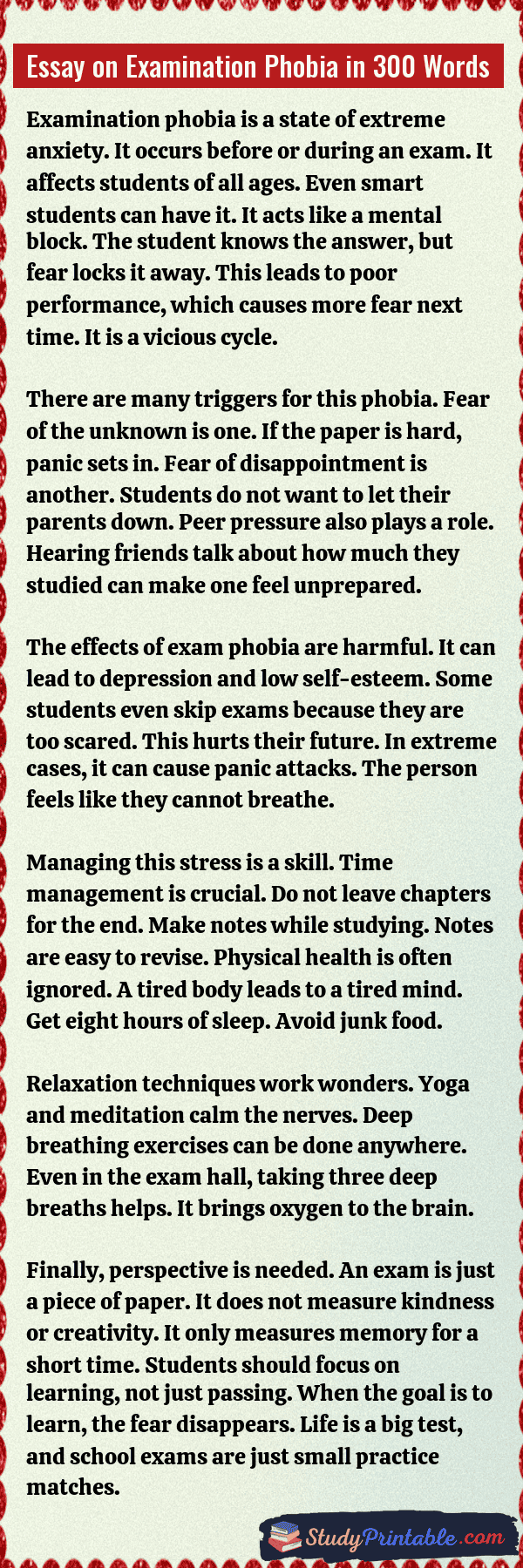
Examination phobia is a state of extreme anxiety. It occurs before or during an exam. It affects students of all ages. Even smart students can have it. It acts like a mental block. The student knows the answer, but fear locks it away. This leads to poor performance, which causes more fear next time. It is a vicious cycle.
There are many triggers for this phobia. Fear of the unknown is one. If the paper is hard, panic sets in. Fear of disappointment is another. Students do not want to let their parents down. Peer pressure also plays a role. Hearing friends talk about how much they studied can make one feel unprepared.
The effects of exam phobia are harmful. It can lead to depression and low self-esteem. Some students even skip exams because they are too scared. This hurts their future. In extreme cases, it can cause panic attacks. The person feels like they cannot breathe.
Managing this stress is a skill. Time management is crucial. Do not leave chapters for the end. Make notes while studying. Notes are easy to revise. Physical health is often ignored. A tired body leads to a tired mind. Get eight hours of sleep. Avoid junk food.
Relaxation techniques work wonders. Yoga and meditation calm the nerves. Deep breathing exercises can be done anywhere. Even in the exam hall, taking three deep breaths helps. It brings oxygen to the brain.
Finally, perspective is needed. An exam is just a piece of paper. It does not measure kindness or creativity. It only measures memory for a short time. Students should focus on learning, not just passing. When the goal is to learn, the fear disappears. Life is a big test, and school exams are just small practice matches.
Essay on Examination Phobia in 500 Words
Examination phobia affects millions of students globally. It is a psychological condition. It involves an excessive worry about evaluating performance. To a student with this phobia, an exam feels like a life-or-death situation. It creates a sense of doom. The days leading up to the exam are filled with dread. The student cannot enjoy anything. Even watching TV or playing feels wrong because of the guilt.
The symptoms manifest in various ways. Physically, the body reacts to stress. The stomach feels funny, often called “butterflies.” There might be vomiting or loose motions. The hands get cold and clammy. The heart races fast. Mentally, the student loses focus. They read the same line ten times but do not understand it. They become irritable and angry with family members. This changes the atmosphere of the house.
The root causes are deep. The education system is very competitive. There are few seats in good colleges. This creates a “rat race.” Students feel they must win to survive. This survival instinct triggers fear. Also, poor study habits contribute. Procrastination is the enemy. Waiting for the last minute creates a mountain of work. This mountain looks scary.
Parents play a huge role here. Sometimes, they live their dreams through their kids. They push them too hard. They compare them with neighbors or cousins. This comparison kills the child’s spirit. Instead of support, the child feels judged.
Overcoming exam phobia requires a holistic approach.
First, change the study method. Do not memorize blindly. Understand the logic. Use charts and pictures. This makes learning fun. Break the syllabus into small chunks. Finishing a small chunk gives a sense of achievement.
Second, take care of the body. The brain is an organ. It needs fuel. Eat fruits, nuts, and vegetables. Drink lots of water. Avoid sugary drinks. They give a rush but then a crash. Exercise daily. A thirty-minute walk clears the fog in the head.
Third, practice relaxation. When fear strikes, stop. Close your eyes. Count to ten. Tell yourself, “I am prepared.” Positive self-talk rewires the brain. Do not talk to friends who are panicking. Panic is contagious. Stay away from negative energy.
Teachers should create a friendly environment. They should assess students on projects, not just tests. Schools should have counselors. Talking to an expert helps the student understand their feelings.
In conclusion, examination phobia is a hurdle, not a wall. It can be crossed. It requires patience and discipline. We must remember that failure is a part of success. Edison failed many times before making the bulb. An exam result is just a number. It does not define the worth of a human being. Life offers many chances. Students should take exams with a smile. They should do their best and leave the rest. A brave heart is the best preparation for any test in life.
Essay on Examination Phobia in 1000 Words
Examination phobia is a term that haunts many households. It is a specific type of anxiety disorder. It is centered around situations where one is being evaluated. For a student, exams are the biggest source of this stress. It is a feeling of intense fear that is out of proportion to the actual danger. Exams are meant to test knowledge, but for many, they test their mental stability. This fear can be paralyzing. It stops a student from reaching their true potential. It turns bright, happy children into nervous, anxious wrecks.
Understanding the Fear
The fear of exams is primal. It is linked to the fear of rejection. In the mind of a student, low marks equal rejection. They fear rejection from parents, teachers, and society. This fear triggers the body’s “fight or flight” response. The body floods with adrenaline. This is useful if a tiger is chasing you. But it is not useful when you are sitting in a quiet room trying to solve math problems. The adrenaline makes the mind race. It makes the body shake. It makes it impossible to sit still and think deeply.
The Symptoms
The symptoms of examination phobia are visible and invisible.
Physical Symptoms: These are the body’s way of screaming “Help!” Common signs include rapid heartbeat and shortness of breath. Many students experience digestive issues. They might feel nausea or have diarrhea before a test. Headaches are very common. Some even faint due to the drop in blood pressure caused by panic.
Emotional Symptoms: These include feelings of anger, helplessness, and disappointment. The student feels like crying for no reason. They feel isolated. They think, “No one understands me.”
Cognitive Symptoms: This affects thinking. The mind goes blank. This is the most frustrating part. The student knows the answer. They studied it yesterday. But in the exam hall, the memory is locked. It creates confusion and negative thinking. Thoughts like “I am stupid” or “I will fail” take over.
The Root Causes
Why does this happen? The reasons are many.
External Pressure: The biggest factor is pressure. In many cultures, academic success is the only measure of worth. Parents invest money and hope in their children. They expect returns in the form of grades. This expectation is a heavy load. Schools also push students to keep the school’s ranking high.
Fear of Failure: Failure is seen as a taboo. We do not teach kids how to fail. We only teach them how to win. So, when they face a test, they are terrified of failing. They do not see failure as a learning opportunity. They see it as a full stop.
Lack of Preparation: Sometimes, the fear is real because the work is not done. Students who waste time during the year panic at the end. They try to learn a year’s worth of work in a week. This is impossible. The realization of this impossibility causes phobia.
Strategies to Overcome Phobia
Defeating this monster is possible. It requires a systematic approach.
Preparation is Key: There is no substitute for hard work. But it must be smart work. Make a study plan at the start of the year. Stick to it. Use the “Pomodoro” technique. Study for 25 minutes, then take a 5-minute break. This keeps the brain fresh. Do not study difficult topics when you are tired. Do them when you are fresh in the morning.
Mock Exams: Fear often comes from the unknown. Remove the unknown by practicing. Set a timer at home. Sit in a quiet chair. Take a past paper. Write the exam like it is real. Do this many times. When the real exam comes, it will feel like just another practice session.
Lifestyle Changes: The brain needs a healthy body. Sleep is non-negotiable. During sleep, the brain stores what it learned. Cutting sleep to study is a bad idea. It leads to memory loss. Diet is also important. Eat brain foods like walnuts, fish, and green leafy vegetables. Avoid heavy, oily food that makes you sleepy.
Relaxation Techniques: Learn to calm the body. Deep breathing is the simplest tool. Breathe in for four seconds, hold for four, and breathe out for four. This slows down the heart. Progressive muscle relaxation is also good. Tense your muscles and then let them go loose. This releases physical tension.
Role of Parents and Teachers
Adults have a big duty. Parents must create a supportive home. They should not discuss marks all the time. They should praise effort, not just results. If a child studies hard but gets low marks, praise the hard work. This builds resilience.
Teachers should make classrooms safe spaces. They should encourage questions. They should not humiliate students who score low. They should offer extra help. Schools should teach stress management. They should have sessions on how to handle anxiety.
The Day of the Exam
On the big day, keep things simple. Wake up early. Do not rush. Eat a light breakfast. Do not read new topics. It will only confuse you. Arrive at the center on time. Avoid students who are discussing questions. They will only make you nervous. Sit in your seat and close your eyes. Remind yourself that you have prepared. When the paper comes, read it slowly. Start with the easy answers. This builds confidence. If you get stuck, move on. Do not panic. Come back to it later.
Conclusion
In conclusion, examination phobia is a temporary shadow. It can be dispelled with the light of preparation and a positive mindset. Exams are just a method to check progress. They are not the final judgment of a person’s life. Many successful people were average students. Einstein and Bill Gates did not top every exam. What matters is curiosity and the willingness to learn. Students must realize their own worth. They are more than their report cards. By facing exams with courage, they learn a life lesson. They learn to handle pressure. This skill will help them more than any grade ever will. So, take a deep breath, smile, and do your best. That is all that matters.
FAQ
What causes exam phobia?
Exam phobia is caused by the fear of failing. Students worry about what parents and teachers will think. Lack of studying also causes fear. When you are not ready, you feel scared.
How can I calm down before a test?
You can calm down by taking deep breaths. Close your eyes and count to ten. Drinking a little water helps too. Thinking happy thoughts can make the fear go away.
Is it okay to feel nervous?
Yes, it is very normal to feel a little nervous. Everyone feels it. A little nervousness helps you focus. But too much fear is bad. You must learn to control it.
What should I eat before an exam?
You should eat light and healthy food. Fruits, nuts, and eggs are good. Do not eat heavy or oily food. Heavy food makes you feel sleepy and tired.


